Dutch Oven vs Cast-Iron Skillet: Which Pan Should You Reach For?
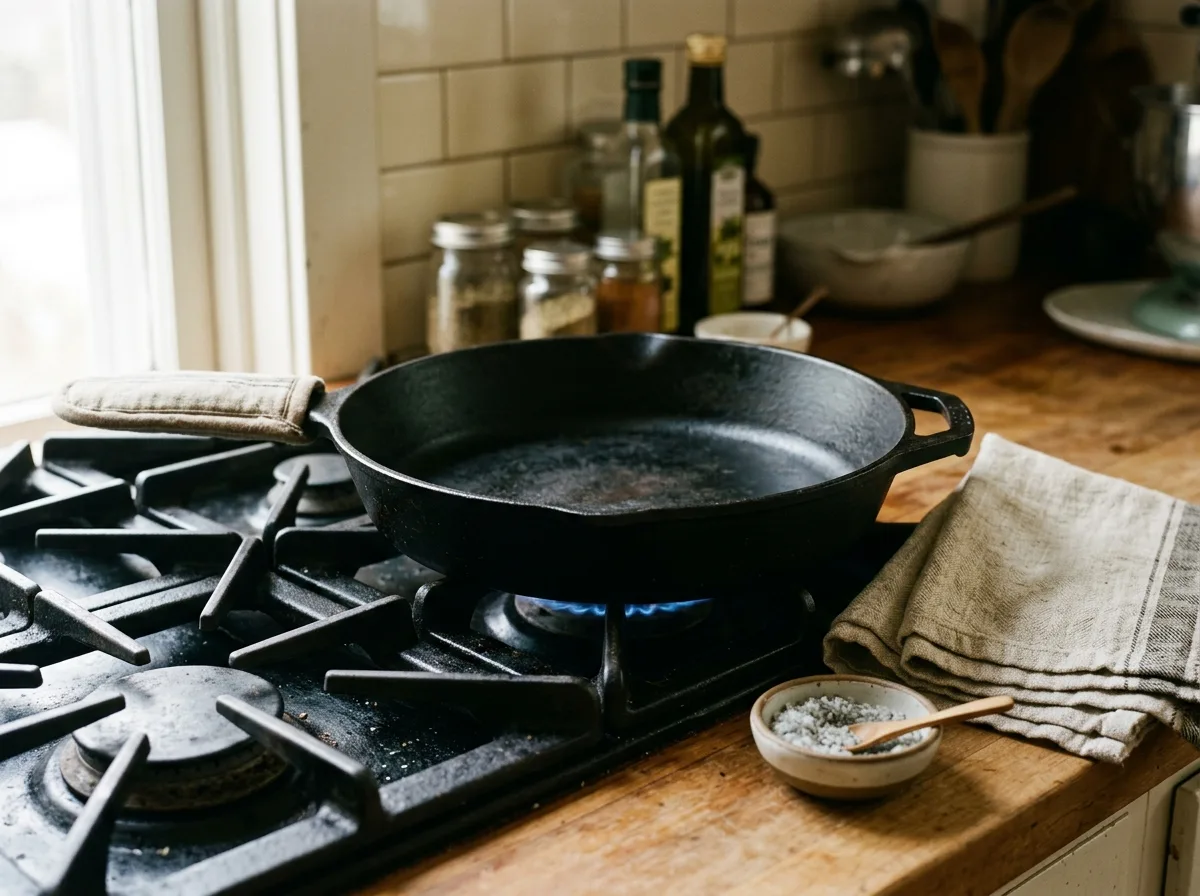
Bare cast iron suits dry, high-heat cooking. An enameled Dutch oven suits acidic simmers, covered braises, and bread.
By OnMyKitchen · 4 min read
1. Acidic Ingredients: Tomatoes, Wine & Lemon
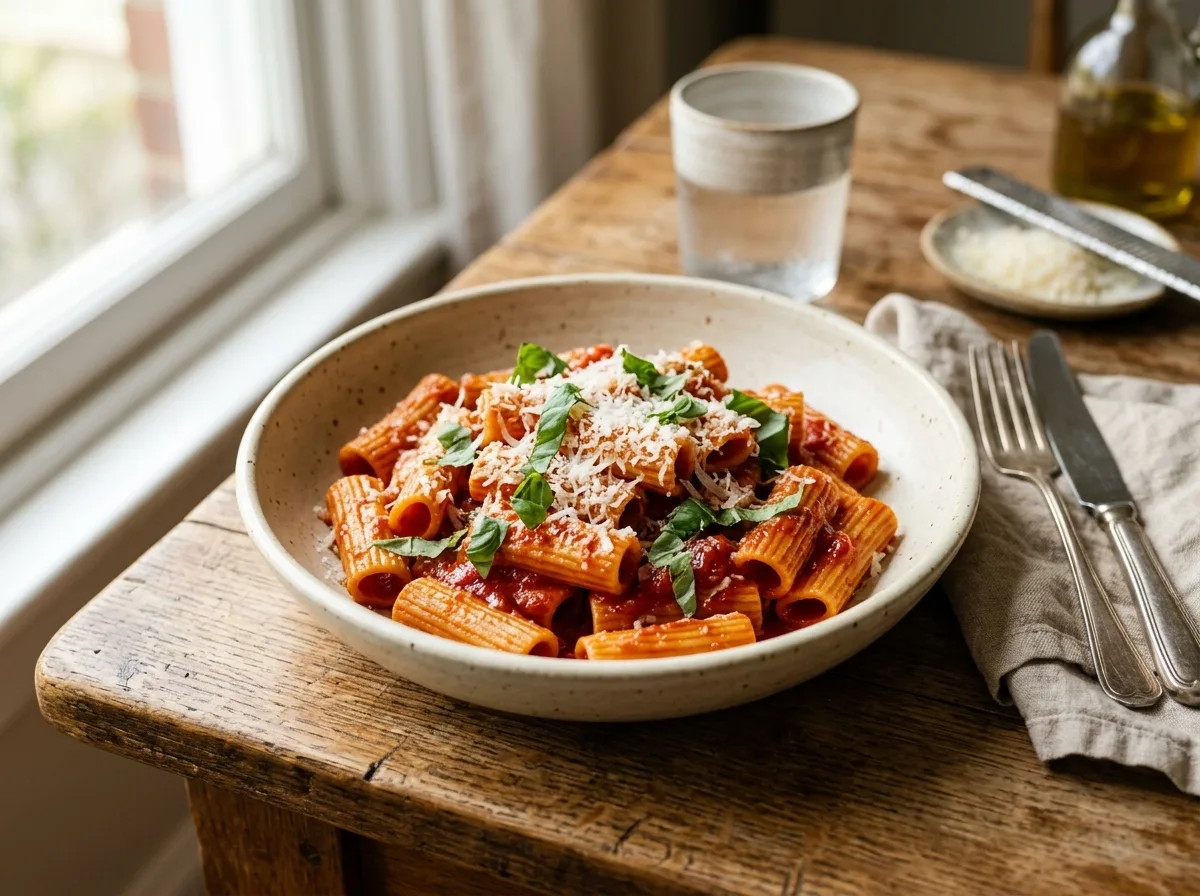
Bare cast iron is protected by a layer of polymerized cooking oil. A quick deglaze with lemon juice or wine is fine in a well-seasoned skillet. A long tomato simmer is harder on the seasoning and can give the sauce a faint metallic taste.
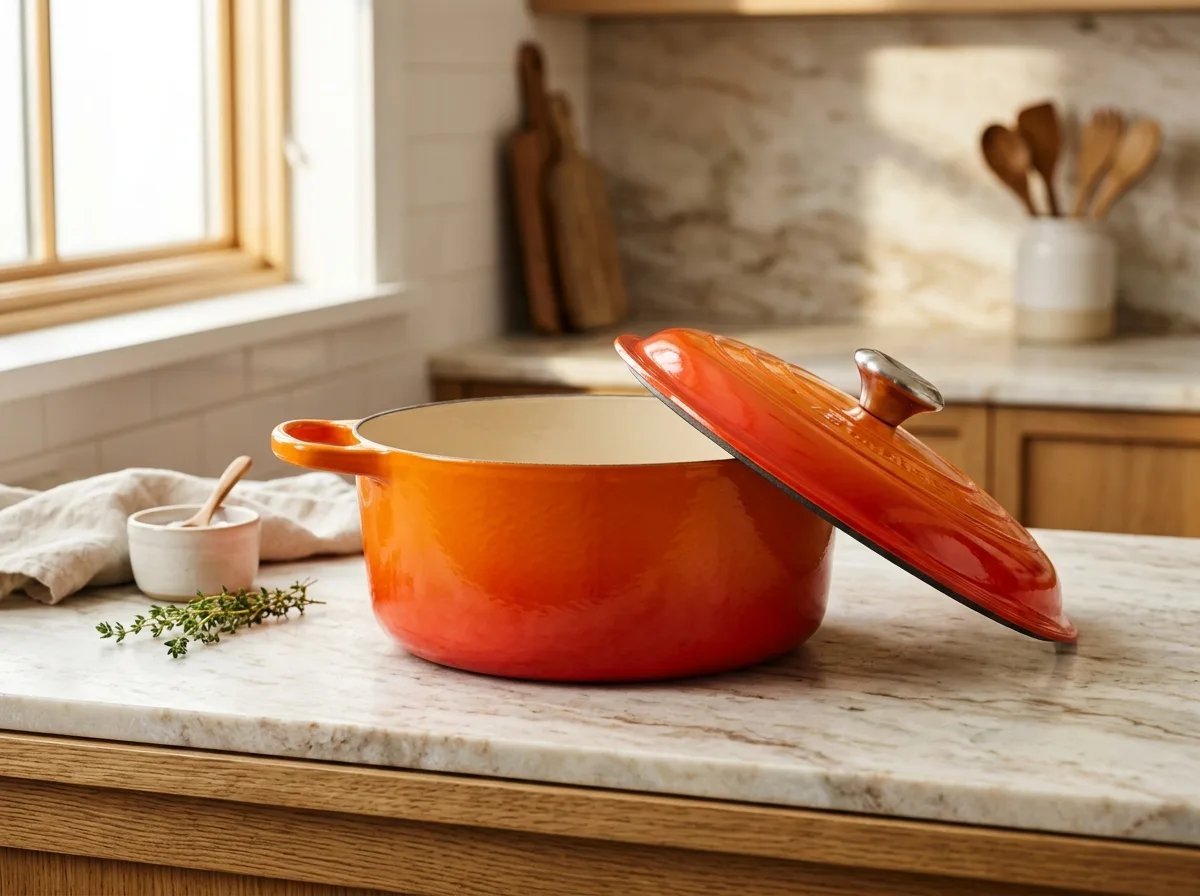
Enameled cast iron has a glass-like coating over the iron, so tomato sauces, wine braises, and vinegar reductions can simmer for a long time without reacting with the metal.
2. Wall Height & Steam
The tall walls and tight lid of a Dutch oven keep moisture inside, which suits braised beans, soups, and bread baked under a lid.
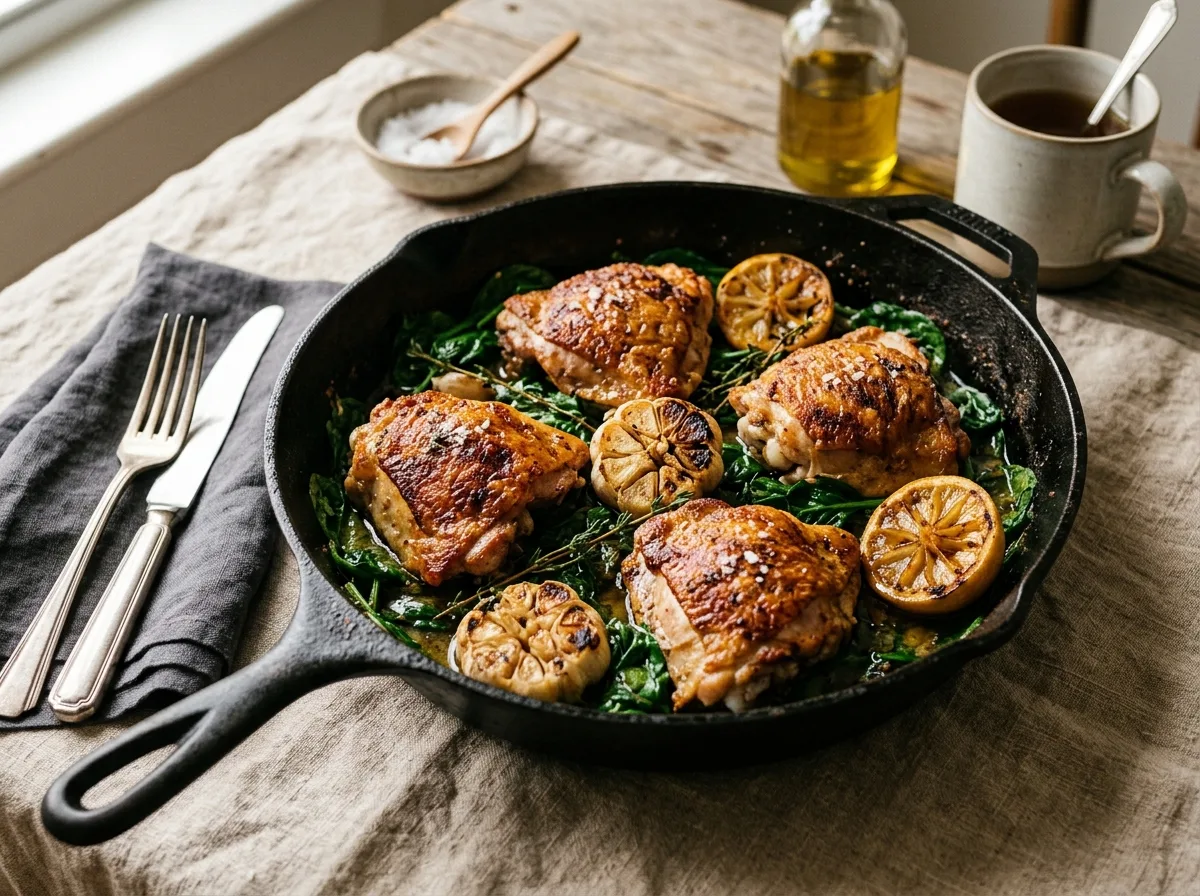
Those same walls work against crisp skin and seared fish, because steam condenses on the sides and drips back onto the food. A skillet’s low walls let steam escape.
3. Weight & Storage
Both pans are heavy. Look for a helper handle on a large skillet and wide loop handles on a Dutch oven, so you can lift with two hands and oven mitts.
Recipes That Use This Technique
Cookware Mentioned in This Guide
- Le Creuset Signature 5.5-Qt Dutch Oven — A 5.5-quart enameled cast-iron Dutch oven with a light sand-colored interior and wide loop handles. It suits braises, tomato sauces, soups, and covered bread baking.
- Lodge 12-Inch Seasoned Cast-Iron Skillet — A pre-seasoned 12-inch cast-iron skillet with a helper handle. It has enough floor space to cook four bone-in chicken thighs without crowding.
More Kitchen Technique Guides